
Launchling
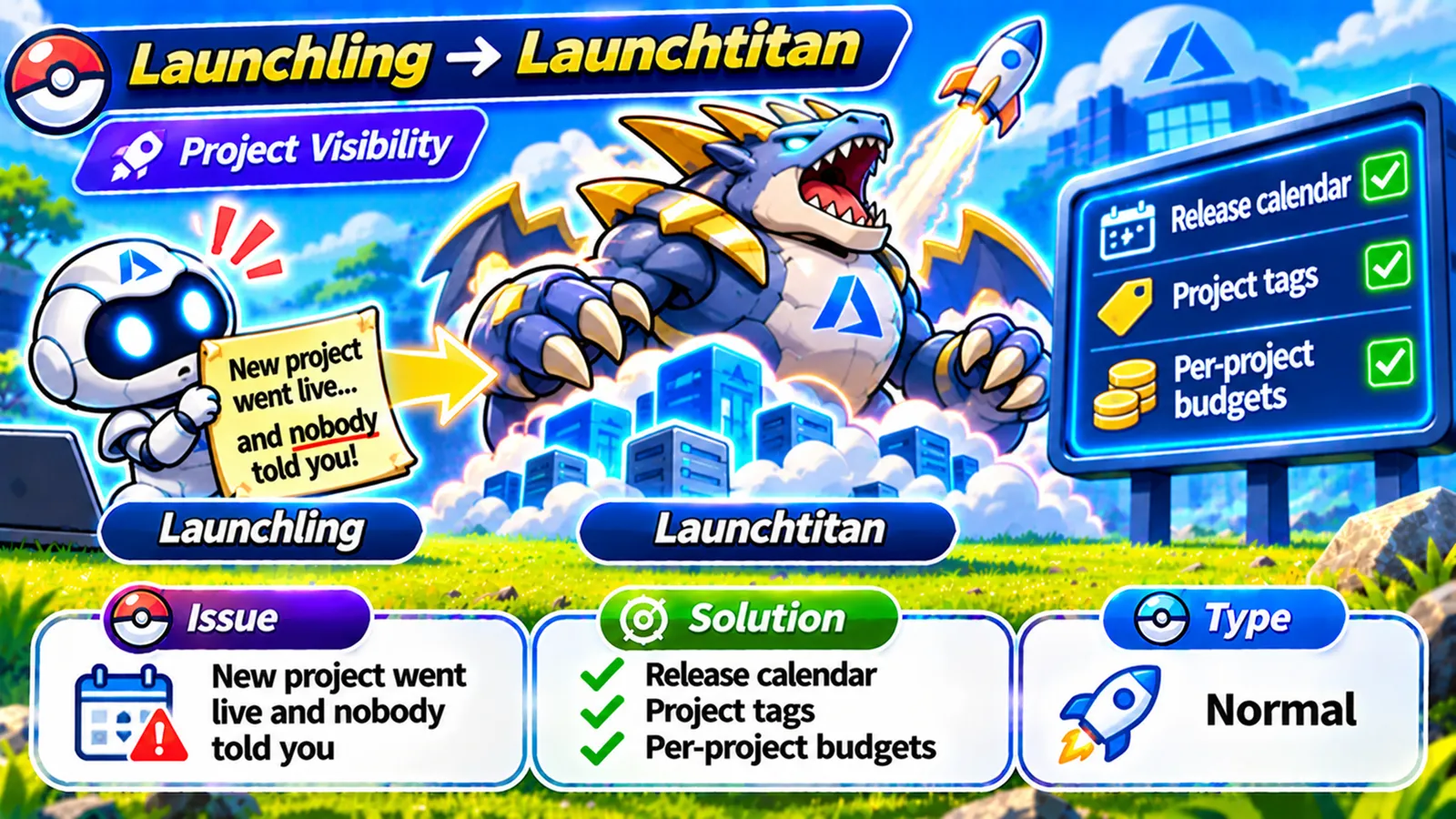
- Type
- Provisioning
- Anomaly
- New project or environment appears and cost jumps, with nobody told
- Evolves into
- TBC
- Weakness
- New resource detection, onboarding process, architecture review
What it is
Launchling is the most common anomaly of all. A team spins up a new project or copies an environment and deploys a batch of new resources without telling the wider team. The spend is legitimate, but nobody planned for it or knew it was coming.
How to spot it
- Step change in spend on a subscription or resource group.
- New resources, resource groups or subscriptions appearing in Cost Analysis.
- Budget breaches on a scope that was quiet last month.
Common causes
- New project deployed with no communication to FinOps or finance.
- A new environment created as a full copy of an existing one.
- Premium SKUs chosen to meet requirements without checking for existing shared capacity (e.g. API Management).
- No onboarding process for new subscriptions or resource groups.
Evolution: TBC
Left unmanaged, every new project adds its own copy of shared services and the estate sprawls.
Defences
- New resource identification: detect new resources and new spend as it appears.
- Onboarding process for new subscriptions and resource groups.
- Architecture review to reuse existing assets instead of buying new ones.
- Budget breach alerts and anomaly detection as a backstop.
- The goal is less about avoiding cost and more about making sure new cost is communicated and managed.
Real world encounter
The encounter
A project team needs an API layer for a new customer-facing product. To keep environments properly separated they deploy three new environments, each with its own Azure API Management instance on a Premium SKU. The project meets its requirements and the deployment goes smoothly. The first indication anyone else has is a sharp step up on the monthly bill, on subscriptions the FinOps team had no warning about.
Tracking it down
Cost Analysis grouped by resource group shows the increase is new rather than gradual: the resource groups did not exist the month before. Grouping by service shows most of the spend is API Management, on Premium in all three. A new resource report confirms everything was created within a few days. A conversation with the project team confirms it was deliberate and nobody had done anything wrong.
The surprise was that the organisation already ran API Management elsewhere, with spare capacity. The project team simply didn't know it existed, and nobody had asked them to check.
Catching it
The cost was legitimate, so this was not about stopping it but challenging it. An architecture review looked at whether the existing instance could be shared, or whether non-production could use a cheaper tier. The team consolidated where it made sense and set up a FinOps scope and budget for the project so the remaining spend was visible and owned.
The lesson
Launchling is the most common anomaly because it isn't a mistake, it's a launch. The problem is communication, not waste: new cost arrived without anyone planning for it. The defences are process ones: onboarding for new subscriptions and resource groups, new resource detection, budget breach alerts, and an architecture review that asks "do we already own something that does this?" before buying new.